
Short answer: Most natural stone sinks, including onyx, marble, travertine and limestone, are calcite-based. That means they all need the same basic care: clean with warm water and a pH-neutral stone cleaner, dry the basin after use, keep acids and harsh chemicals off the stone, and reseal with a penetrating sealer on a regular schedule. Sealing stops stains, but it does not stop acid etching, so quick wipe-ups still matter.
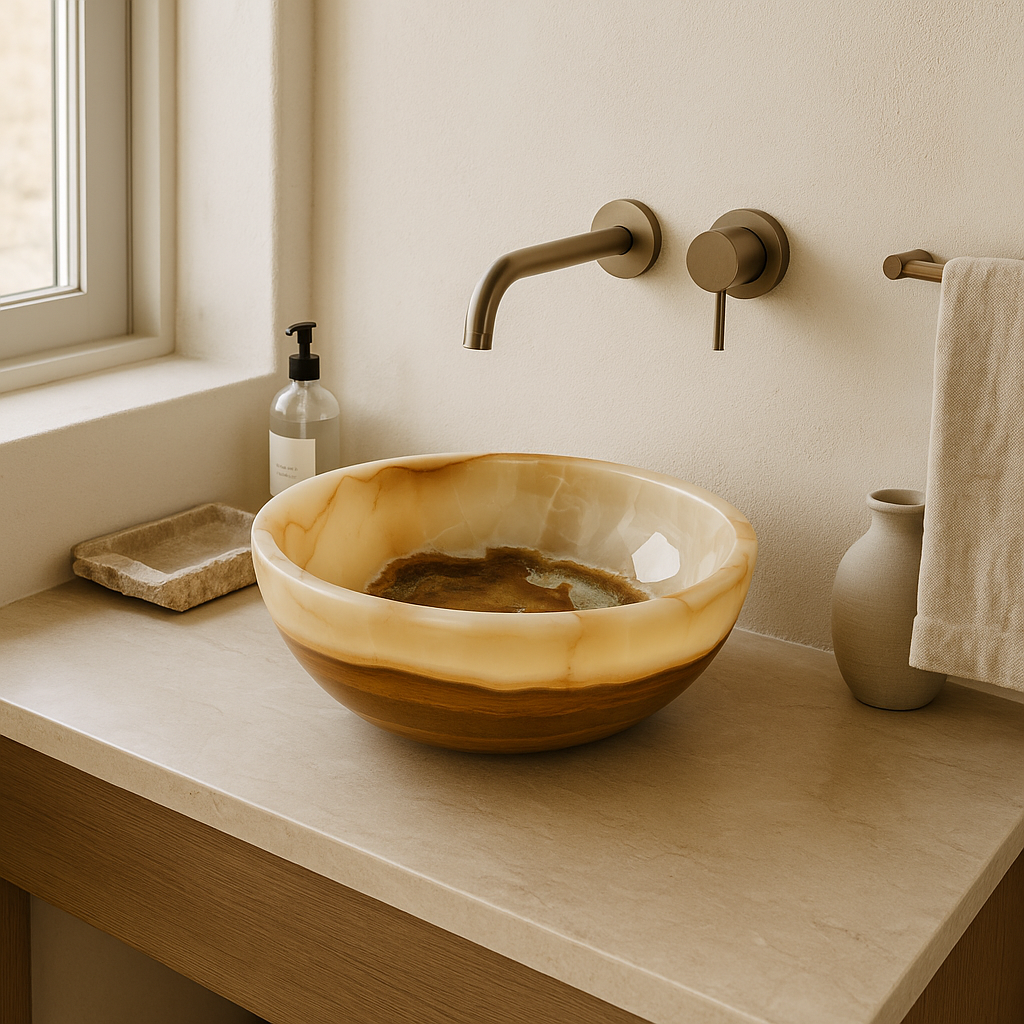
The Spun Gold Onyx Vessel Sink.
Which natural stones are used for sinks?
- Onyx: a banded, often translucent natural stone made of calcite. It's the exotic stone we carry most for sinks; see What Is Going Onyx?.
- Marble: limestone that has been changed by heat and pressure. Same mineral as onyx, so it needs the same care.
- Travertine: a calcite stone that forms around mineral springs. It has natural holes (voids) from trapped gas, which are usually filled.
- Limestone: soft, earthy and also calcite-based.
- Harder stones: granite and true quartzite are silicate stones and much tougher, though they still benefit from sealing.
Why do onyx, marble and travertine need special care?
Calcite is soft, about 3 on the Mohs hardness scale, and it reacts with acids. According to Arizona Tile, all calcite-based stones, including marble, limestone, onyx and travertine, "can etch readily (within a few seconds)" when acids touch them. An etch is a dull, rough mark on the surface. It often looks like a water ring, but it is damage to the stone, not a stain. These stones are also porous, so unsealed stone can absorb oils, dyes and colored liquids.
How do you clean a natural stone sink every day?
- Rinse with warm water after use.
- Wash with a soft cloth and a pH-neutral cleaner made for natural stone, or a little mild dish soap. Too much soap leaves a film.
- Rinse well.
- Buff dry with a soft towel to prevent hard-water spots.
Daltile notes that stone cleaners "should never contain acid or bleach," and that even a light vinegar-and-water mix will etch many natural stones.
What should you keep off a stone sink?
- Vinegar, lemon, citrus and "lime and scale" removers
- Bleach, ammonia and strong bathroom or grout cleaners
- Abrasive powders, magic erasers and scrub pads
- Toothpaste, mouthwash, hair dye, perfume and nail polish remover left sitting on the stone
How often should you seal a stone sink?
It depends on the stone and finish. Seal a new stone sink before installation; CounterFixtures sinks are sold unsealed. Then reseal every 12 months. Use the water test: drip water on the stone. If it beads, you're fine. If it soaks in and darkens the stone, reseal. Use a penetrating (impregnating) sealer made for natural stone.

Sediment Basin: Live-Edge Beige Onyx Vessel Sink.
How does care differ by stone?
- Onyx: more translucent and more brittle than marble, so protect it from impacts. Full routine: How to Care for an Onyx Sink.
- Marble: care is nearly the same as onyx. Polished marble shows etches more than honed marble.
- Travertine: make sure the natural holes are filled, because open voids can trap dirt and grow mold in wet areas.
- Live-edge or raw exteriors: the rough outside of pieces like the Onyx Stone Vessel Sink can hold dust and soap. Wipe it with a soft brush and the same pH-neutral cleaner.
How do you fix stains, etches and scratches?
- Stains (absorbed into the stone): a stone poultice can draw them out. Oil stains darken the stone; organic stains like coffee or tea look pinkish-brown.
- Etches (surface damage): a poultice won't help. Light etches can be polished out with a stone polishing powder; deeper ones need a stone restoration pro.
- Scratches and chips: small scratches can be buffed and polished; deeper damage should go to a professional.
Is a natural stone sink right for you?
If you want a one-of-a-kind exotic stone piece and don't mind a simple routine, yes. For the honest trade-offs, read Are Onyx Sinks Practical for a Bathroom?. Browse onyx sinks like the Chloris Green Onyx Vessel Sink, Midori Onyx Vessel Sink, Avorio Cream Onyx Vessel Sink and Verdant Veil double vanity in our shop, or see them at the CounterFixtures showroom, 909 N. Bowser Rd., Richardson, TX 75081 (Mon–Fri 9–5, Sat 9:30–1:30). Walk-ins are always welcome, and custom appointments are available at 469-779-9999.
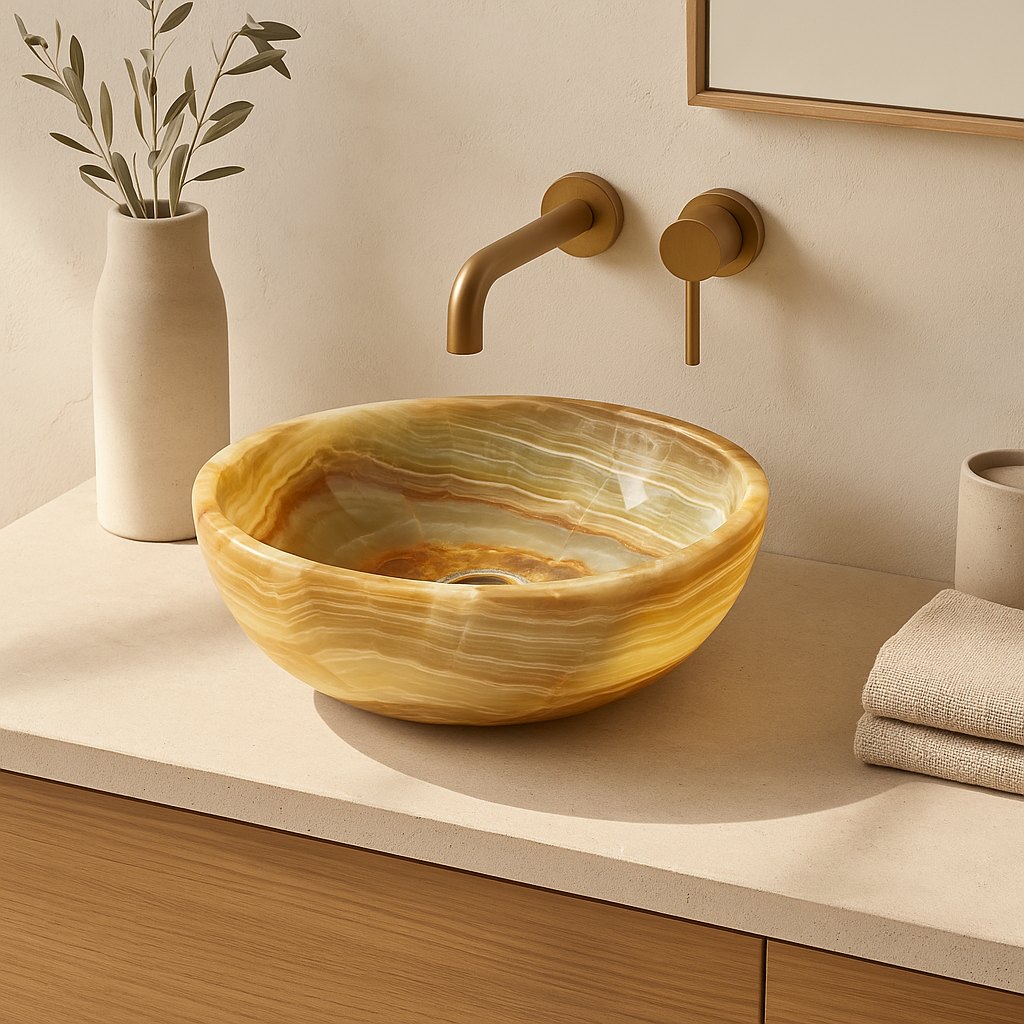
Chloris Green Onyx Vessel Sink.
FAQ
Can I use vinegar on a marble, onyx or travertine sink? No. All three are calcite-based and etch on contact with acid.
Does sealing protect a stone sink from etching? No. Sealing slows staining, but acids still etch sealed stone.
How often should I reseal a natural stone sink? Every 12 months, after sealing it before first use. If the water-drop test shows water soaking in sooner, reseal early.
What's the most durable natural stone for a sink? Granite and true quartzite are harder and more acid-resistant than onyx, marble or travertine. Onyx is chosen for its look and translucence, not toughness.
Can I use bleach to disinfect a stone sink? It's best not to. Use a pH-neutral stone cleaner; some stone-safe products are made for disinfecting.