
Short answer: Yes, if you pick the right room and accept a little upkeep. Like other calcite-based natural stone, a natural onyx sink is softer and more porous than granite, so it needs sealing, pH-neutral cleaners and quick wipe-ups because acids can etch it. It shines in powder rooms, guest baths and primary baths with careful users. In a hard-working kids' bathroom, a tougher stone is usually the easier choice.
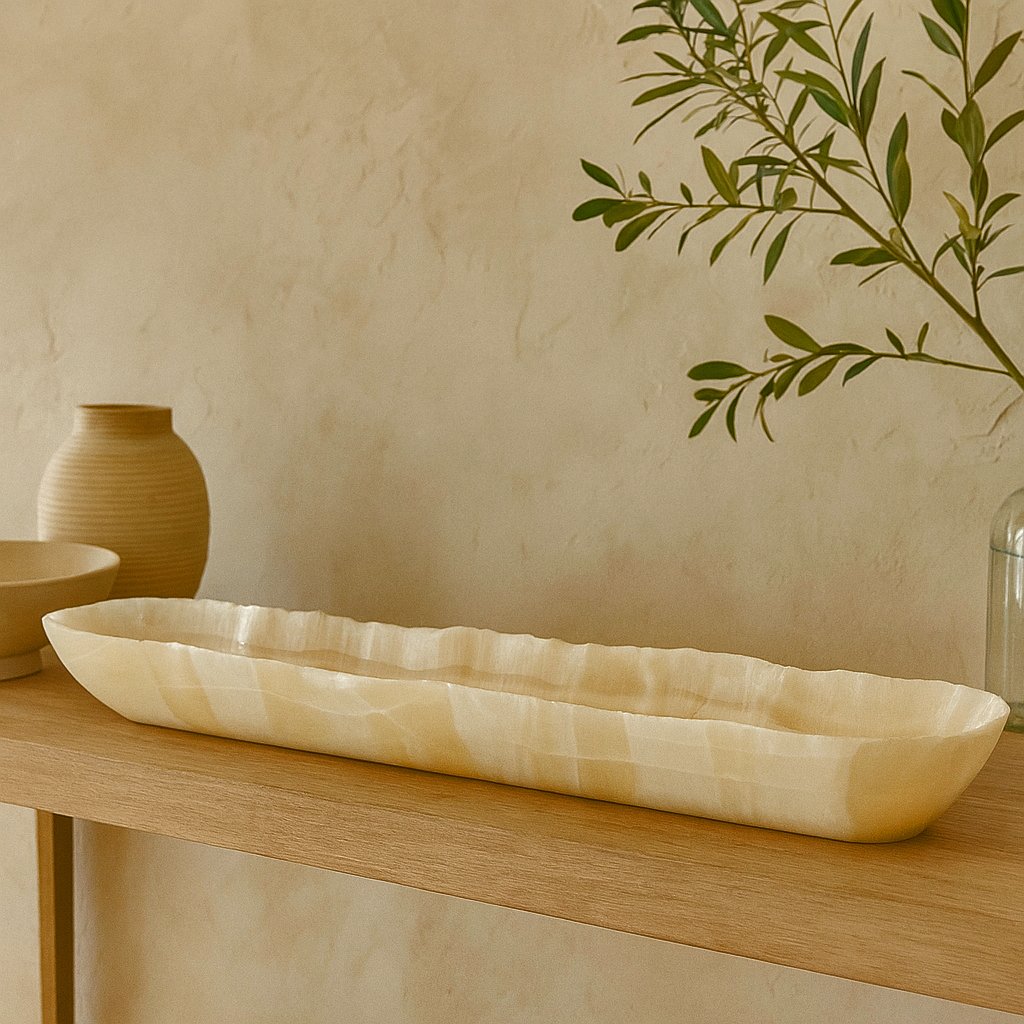
Long Onyx Vanity Bowl – Cream.
What makes onyx different from granite or quartz?
Decorative onyx is a natural, calcite-based stone that forms in layers, often in caves and around springs (more in What Is Going Onyx?). Those layers make it translucent, so light passes through it. But calcite is about 3 on the Mohs hardness scale. Granite is roughly 6 to 7, and engineered quartz is also much harder. Onyx is also more porous and reacts with acid, much like marble.
What are the pros of an onyx sink?
- One-of-a-kind look. As an exotic stone, every piece of natural onyx has its own banding and color, so no two sinks match.
- Translucence. Light passes through thin onyx, giving it a soft glow few other materials have.
- A sculptural focal point. Vessel sinks carved from a single block, like the Avorio Cream Onyx Vessel Sink, act as art in a bathroom.
- Smooth, warm feel. Polished onyx feels silky to the touch.
What are the cons?
- Scratches more easily. Its softness means grit, jewelry or dropped objects can mark it.
- Etches from acids. Lemon juice, vinegar, many bathroom cleaners and some cosmetics can leave dull spots.
- Stains without sealing. Its pores can absorb colored liquids like hair dye, makeup and oils.
- More brittle. Onyx can chip or crack from a hard impact more readily than granite.
- Ongoing care. It needs sealing before use, resealing every 12 months and gentle products for its whole life.
- Cost. Natural onyx is usually considered a premium material.
Where does an onyx sink work best?
- Powder rooms and guest baths: light use, high visibility. This is onyx's sweet spot.
- Primary bathrooms: a good fit for owners willing to dry the basin and keep products on a tray.
- Boutique hospitality and showpiece spaces: where the look matters and cleaning staff can follow a stone-safe routine.
It's a harder fit for busy family bathrooms, where any natural stone sink takes more upkeep, where toothpaste, hair dye and harsh cleaners are part of daily life.
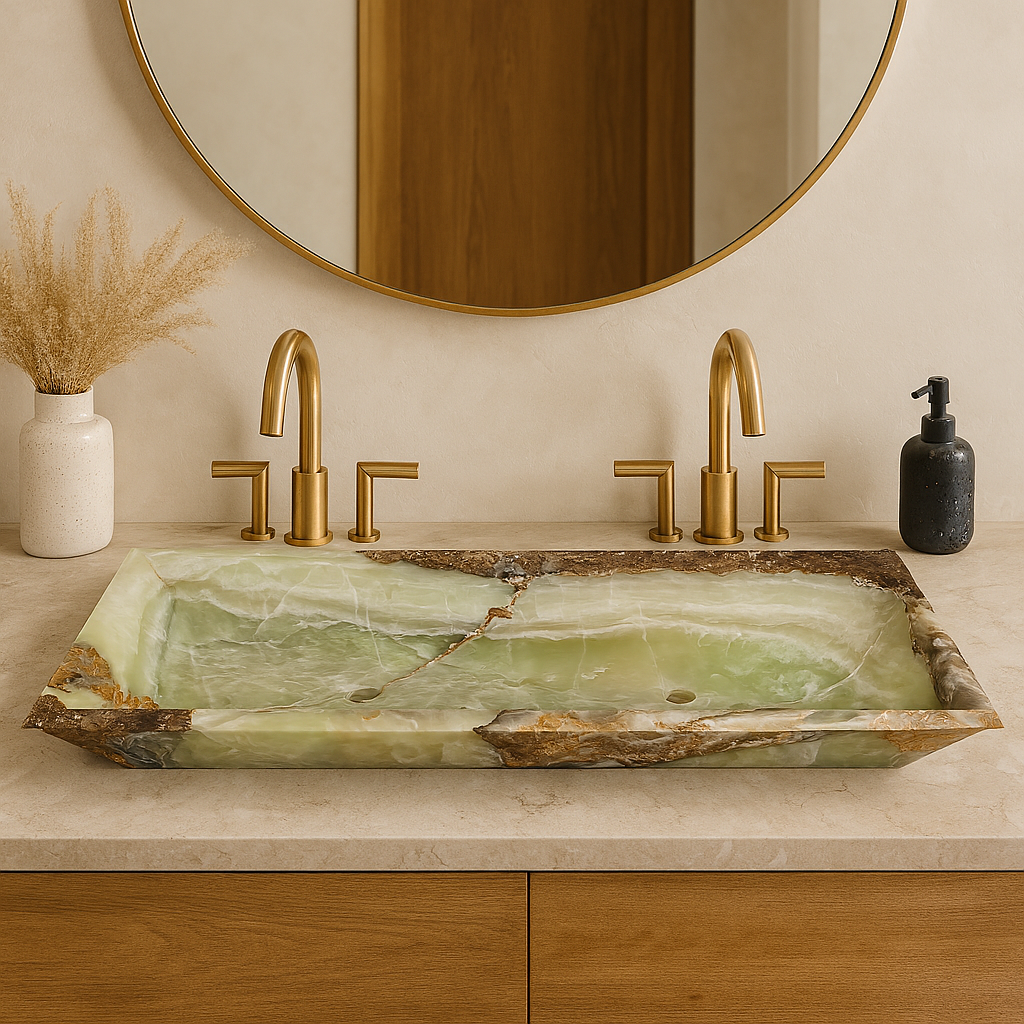
Verdant Veil: Double Vanity Sink in Green Onyx.
How do you make an onyx sink last?
- Seal it with a penetrating natural-stone sealer before first use (CounterFixtures sinks are sold unsealed), then reseal every 12 months.
- Clean with warm water and a pH-neutral stone cleaner only.
- Dry after use to prevent hard-water spots.
- Wipe up toothpaste, soap and cosmetics quickly.
- Have a stone professional fix etches or chips rather than trying harsh products.
Comparing onyx with marble or travertine? Our guide How to Care for a Natural Stone Sink covers care for every natural stone sink.
Our full routine is in How to Care for an Onyx Sink.
Is onyx a good alternative to other stone?
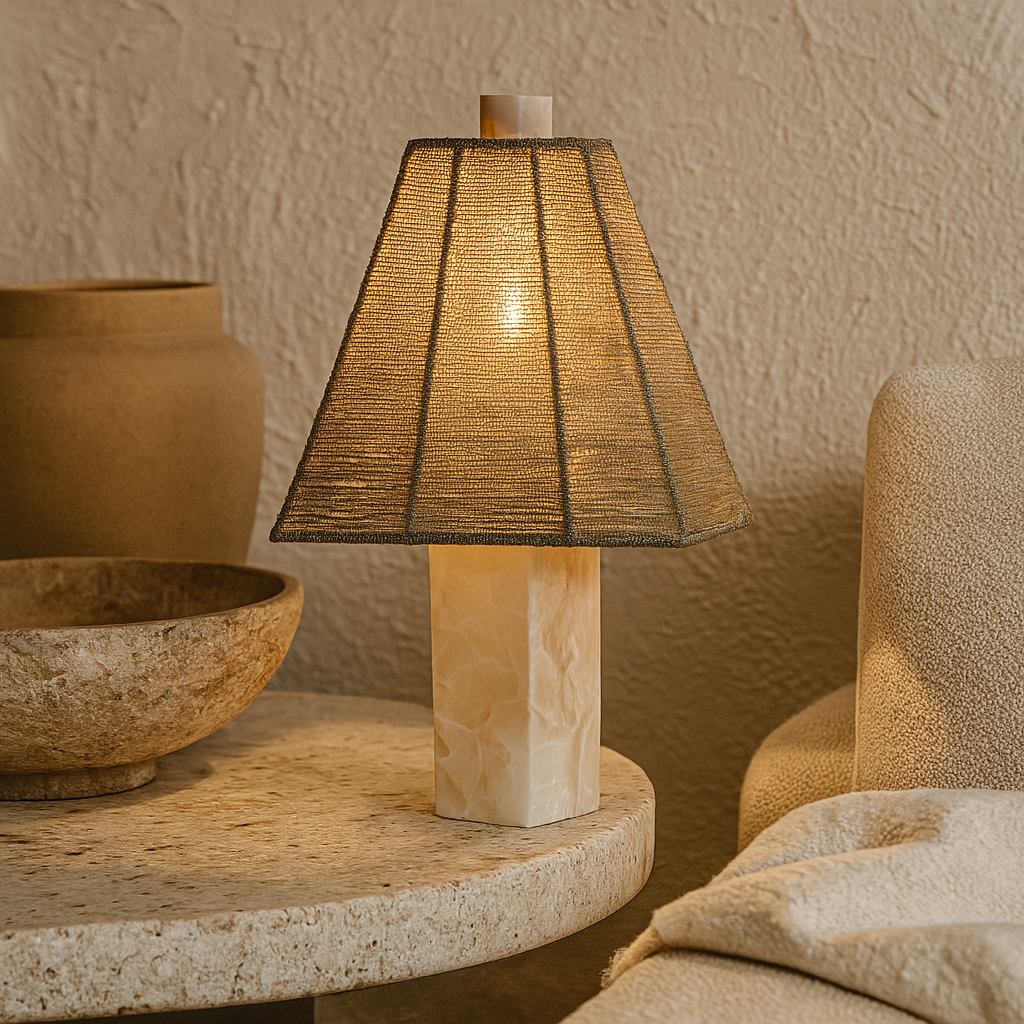
If you love the look but want less upkeep, you can still bring onyx into the home in lower-wear ways, like the Translucent Onyx Modern Lamp, Onyx Floor Lamps or the Onyx Boulder Coffee Table.
See the stone before you decide
Photos can't show how onyx glows. Visit the CounterFixtures showroom at 909 N. Bowser Rd., Richardson, TX 75081 (Mon–Fri 9–5, Sat 9:30–1:30). Walk-ins are always welcome, and custom appointments are available at 469-779-9999. Browse all pieces in our shop.
FAQ
Is onyx harder than granite? No. Onyx is about 3 on the Mohs scale, while granite is around 6 to 7. That's why onyx scratches more easily.
Does an onyx sink stain? It can if it isn't sealed. Sealing and quick wipe-ups prevent most stains.
Do onyx sinks come sealed? CounterFixtures sinks are sold unsealed. Seal before first use and reseal every 12 months.
Is onyx good for a kids' bathroom? It's usually not the easiest choice. Heavy use and harsh products make etching and scratches more likely.
Is onyx the same as marble? They're related. Both are mostly calcite, so they need similar care, but onyx forms in layers and is often more translucent.